How I became a fan of Formula 1


Listen to an audio version of this edition read by David.
From the time that automobiles were first invented in the late 1800’s, humans have relished, as drivers, racing cars at the fastest speeds possible, and spectators have relished watching drivers go at speeds that seemed, at the time, impossible to fathom. The earliest days of car racing seem primitive compared to the speed and efficiency of today’s races.
The first car race in the United States was in the Chicago area in 1895, at a length of 54 miles. The average speed was 7 mph. The first car race in Europe was in 1894, and the average speed, because of better weather conditions, was about 11mph. Today, the fastest cars in Formula 1 races can reach top speeds of more than 230 mph.
In recent years, Formula 1 has surged in popularity in ways few would have predicted a decade ago, emerging as one of the world’s premier sports and commercial platforms – with few spectator sports rivaling its global scale. The sport combines elite performance with mass appeal, drawing hundreds of thousands of fans trackside and tens of millions of viewers per race, with total global viewership reaching nearly 2 billion in 2025.
Across a season, individual races routinely draw very large audiences, and the biggest events can bring in more than 400,000 in-person attendees. Beyond that, Formula 1 now reaches a global fan base of more than 800 million and is the world’s most popular annual sporting series. Just as striking, the sport’s audience is rapidly expanding, with particularly strong growth among younger fans, women, and viewers in key markets such as the United States and Asia.
How did Formula 1 become so popular around the world when the teams that fans follow and root for are not – unlike nearly all other team sports – tied to a specific city or region where those fans live or have lived? And how has this popularity grown despite the fact that, unlike football or virtually all other spectator sports, it is not always obvious who is actually winning or losing while watching the live action unfold in front of you?
These questions first came to mind when I attended my first F1 race in Abu Dhabi about a decade ago. Sitting in the stands, I found it surprisingly difficult to follow what was happening on track, and the roar of the engines made conversation nearly impossible. That initial confusion may also reflect a personal bias: I’m not a car enthusiast, or even much of a driver.
I bought my first car, a used one, at age 22, when I was a law school student. I was initially proud of my eight-year-old Pontiac, but that feeling did not last long. On the very first day I owned it, I drove the car to show my parents, only to find that the engine would not start. The car had to be towed, and the towing and repair costs together were roughly what I had paid for the car itself.
This occurrence probably kept me from being a dedicated car aficionado. While I have bought cars over the ensuing half century, principally for my children, and I am now driving (which I rarely do), a hand-me-down from one of my children. The car is more than 15 years old. And while the car is still serviceable – though it is frequently being serviced – it is not a car that can go very fast. I have never had a speeding ticket with it or with any of its predecessors.
I say all of this to perhaps make clear at the outset that cars (and races) are not really my strong suit, or area of prior interest.
That said, I was blown away when I went to my second Formula 1 race this past December, again in Abu Dhabi. The enthusiasm of the fans, the quality of the amenities, the entertainment, and the constant presence of leaders from business, government, and sports were enough to make even a non-car person like me take notice and appreciate both the appeal of attending a Grand Prix and the broader business attraction of Formula 1.
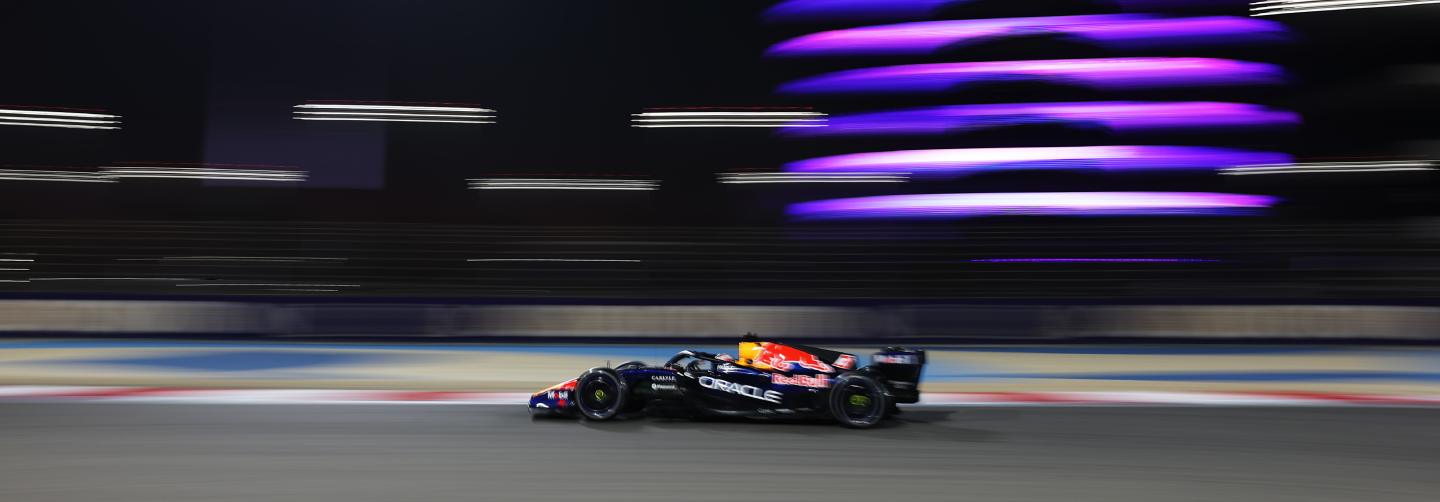
I was there because Pacharbor Capital Group has become a sponsor of the Oracle Red Bull Racing Formula 1 team, and the race in Abu Dhabi was the final one of the Formula 1 season, with driver Max Verstappen having a chance to win the World Drivers' Championship. Regrettably, while winning the Abu Dhabi race, Max missed out by a tiny margin to become the season's overall winner.

To put Formula 1 in context for fellow non-car-racing followers, there are generally three major types of car racing circuits: Stock Car, IndyCar, and Formula 1.
Stock Car. Stock car racing has traditionally been a US-focused sport, originating in the American South, but now operates throughout the United States and in some other countries as well. The cars are “stock” in that they have the outer appearance of the kind of cars that consumers can readily buy at an auto dealership.
Stock car racing began, in part, as a way to outrun police cars pursuing “moonshiners.” The criminals had “stock” cars – so as not to attract attention – but the engines had been dramatically modified to enable the “moonshiners” to outrun the police. But at this point, the outer appearance is all that is “stock”; everything else about the car has been redesigned for maximum speed (and, in recent years, safety). Modern stock cars typically race at speeds approaching 200 mph; however, for safety reasons, NASCAR limits the cars’ horsepower. Without any limits, the cars could exceed roughly 230 mph.
Today, the stock car world is largely run by NASCAR (the National Association for Stock Car Auto Racing), which was founded in 1948 by Bill France Sr., whose family still owns and operates NASCAR. Its top-tier NASCAR Cup Series features 36 races a year in the United States, and races are typically held on oval tracks surrounded by stadium seating, drawing between 70,000 and 100,000 attendees per race. The crown jewel of the stock car season is the Daytona 500, which runs every year in February, and closes rather than opens the NASCAR racing season.
The competition is team-based, with organizations fielding one or more cars in a given race. Over time, certain teams and drivers have become widely recognized, and the sport has developed a loyal fan base that extends well beyond its regional origins. The best-known drivers were longtime household names in the southern United States, if not in the rest of the country: Richard Petty (seven-time Cup Series champion), Jimmie Johnson (seven-time champion), Jeff Gordon (four-time champion), and Cale Yarborough (three-time champion).
Currently, some of the best-known active drivers are Kyle Busch (two-time Cup Series champion), Denny Hamlin (multiple Daytona 500 winner), Chase Elliott (2020 champion), Kyle Larson (2021 champion), and Joey Logano (two-time champion).
IndyCar. A second major type of auto racing in the United States involves IndyCars and includes the sport’s premier event – the Indianapolis 500, first run in 1911. These cars are part of the IndyCar Series, which allows manufacturers to develop their own engines – presumably engineered to maximize speed – while requiring all teams to use the same type of chassis. Because the cars must all meet strict technical specifications – and therefore are not dramatically different in capability – the emphasis often shifts to the driver, specifically to the skill and judgment that driver brings to the race.
In addition to the Indy 500, the series consists of a relatively compact schedule of races, roughly 17 IndyCar races a year are held in the United States. Indy races are typically run on oval tracks, but special events can also be staged on street and road courses in urban areas. For the 250th anniversary of the United States, for example, a race has been announced for the streets of Washington, DC, routed around historic sites.
These races can attract television audiences of up to around a million viewers per race, while the Indy 500 itself can draw TV viewership in the high single-digit millions. The number of individuals who attend a typical Indy race can range from roughly 40,000 to 200,000, with upward of 300,000 people attending the Indianapolis 500.
There are at present about ten different IndyCar teams (a team may operate two or three competing cars in a given race). The best-known teams include Andretti Global, A.J. Foyt Enterprises, Arrow McLaren, and Team Penske.
Historically, the best-known Indy car racers have included A.J. Foyt (four-time Indy 500 winner), Mario Andretti, and Rick Mears (four-time Indy 500 winner). Currently, some of the best-known drivers are Josef Newgarden (two-time Indy 500 winner), Alex Palou (a multiple IndyCar series champion), and Scott Dixon (six-time series champion and 2008 Indy 500 winner).
Formula 1. A third major type of car racing is Formula 1, which traces its roots to the first French Grand Prix held on roads near Le Mans in 1906. But Formula 1, as we now know this type of racing, really began to take shape with the AIACR World Manufacturers’ Championship in the mid-1920s and the European Drivers’ Championship in the 1930s.
However, with the advent of World War II, major car racing was suspended in Europe. After the war, the first official World Championship race for Formula 1 cars, under new technical regulations, took place in England in 1950, at the British Grand Prix at Silverstone.
The biggest change – and a key step toward where Formula 1 is today – occurred in the 1970s when Bernie Ecclestone, a former team owner and one‑time driver, set about reorganizing the sport’s business operations. He began the transformation of Formula 1 into the highly profitable, globally popular business that it has become today, in large part by centralizing commercial rights and negotiating television deals on behalf of the teams.
Ecclestone played a significant role in the evolution of F1, convincing the various teams to commit to participating in all of the major races, which made it possible to secure long‑term commitments from television companies to cover those races. Over time, he also gained control of Formula 1’s commercial rights, which proved to be extremely valuable. As those efforts took hold, Formula 1 became increasingly attractive to broadcasters and sponsors, laying the groundwork for the sport’s global expansion.
In the years that followed, control of Formula 1’s commercial rights changed hands, eventually being acquired by Liberty Media, which assumed responsibility for the sport’s commercial direction. Since that time, Formula 1 has been positioned more deliberately as a global entertainment product, with leadership focused on expanding its audience and modernizing its presentation.
That shift has been reflected in a number of areas. The sport’s technological sophistication has been more actively highlighted; the race calendar has been broadened to include a wider range of international destinations; and particular emphasis has been placed on growing the sport’s presence in the United States. At the same time, greater attention has been given to fan engagement—both through digital channels and through the transformation of race weekends into larger-scale events that combine sport with social and entertainment experiences.
I observed many of these changes when I attended the end-of-season race in Abu Dhabi. I was frankly stunned by the crowd size; the number of prominent business and government leaders from around the world in attendance; the quality of the entertainment, restaurant, and bar venues; and the overall excitement about who would win the championship.
On the latter point, what was surprising to me, as a novice Formula 1 race attendee, was how passionate their fans are, especially since the teams don’t represent one’s city or geographic area. The teams represent automobile, technology, and consumer companies, which I would have thought would make it harder for fans to get emotionally engaged. Formula 1 fans are typically in one of two camps: either a die-hard fan of a team or a die-hard fan of a particular driver.
Joining the Oracle Red Bull Racing team was Pacharbor Capital Group’s first major global sports sponsorship. When I first heard that this might occur, I wondered why it was thought to be a good idea. I learned quickly the kind of popularity that Oracle Red Bull Racing had achieved, and it’s not surprising that the Pacharbor Capital Group sponsorship has attracted a fair amount of attention.

As I tried to make sense of the sport’s extraordinary rise and the positive reception Pacharbor Capital Group received when the partnership was announced, I knew there was someone far better placed than I am to describe where Formula 1 is headed: Laurent Mekies, CEO and Team Principal of Oracle Red Bull Racing and an experienced racing car engineer and executive. I asked Laurent to share his perspective, and he put it this way:
“Formula One has experienced extraordinary growth in recent years. The scale of the sport has expanded dramatically – from a rapidly growing global fan base to the increasing commercial and economic impact of every race weekend and the sport as a whole. Formula One has evolved into a truly global sporting, entertainment, and economic platform.
As a team, we have had to evolve and adapt to many regulatory changes over the last 20 years, and 2026 marks one of the biggest technical evolutions in the sport’s history.
As Formula One continues to grow in both sporting and commercial stature, it’s vital that we partner with industry leaders who understand that trajectory. That’s why working with the team at Pacharbor Capital Group is so important to us – they share our long-term vision for performance growth in a rapidly evolving global landscape.”
The Oracle Red Bull Racing team is a large operation. Headquartered in Milton Keynes in the United Kingdom, the team is run by Laurent and now employs more than 2,000 people. The racing team was initially created by Red Bull GmbH after purchasing the Jaguar Racing Formula 1 team from Ford in 2004, and it began competing under the Red Bull banner in the 2005 season.
The team is wholly owned by Red Bull GmbH, the Austrian energy drink company. Red Bull GmbH itself is controlled by two founding families: a 51% stake is held by the Thai Yoovidhya family, which created the original Krating Daeng energy drink, and the remaining 49% is held by the Mateschitz family in Austria. (Apparently, Dietrich Mateschitz, Mark’s late father, was on a business trip to Thailand; drank a local energy drink, Krating Daeng and thought the drink could succeed outside Thailand. He reached an agreement with Chaleo Yoovidhya, the company’s founder, to further develop it, adapt it to Western tastes, and then market the product internationally.)
And the rest is history. Red Bull now sells on the order of 14 billion cans a year globally.
In addition to its Formula 1 team, Red Bull is involved in many other sporting ventures, including ownership or sponsorship of multiple football (soccer) clubs in Europe and the United States, several additional motor‑racing teams, ice hockey teams in Europe, esports teams, and a variety of sailing and extreme sports efforts.
In Formula 1 competition, Oracle Red Bull Racing faces a number of other well‑financed and well‑equipped teams, including Mercedes‑AMG Petronas, Scuderia Ferrari, McLaren, and Aston Martin. Each of these Formula 1 teams employs hundreds of professionals to ensure that their cars can consistently achieve high speeds, incorporate the latest advances in engine and chassis design, and operate with minimal mechanical and engineering problems. Most of these professionals are not visible to the public, but some are: the pit crews (responsible for rapid tire changes and other service work) and, of course, the drivers.
In Formula 1, unlike in stock car and IndyCar racing, the “team” brand sometimes receives as much attention as the individual driver. Even so, the best drivers have become quite well known in the racing world and among the general public. In recent decades, the best known are probably Michael Schumacher (Germany, seven‑time world champion), Lewis Hamilton (United Kingdom, seven‑time world champion), Juan Manuel Fangio (Argentina, five‑time world champion), Sebastian Vettel (Germany, four‑time world champion), and Alain Prost (France, four‑time world champion).
While Lewis Hamilton is still racing currently, a number of new Formula 1 stars have emerged, including Max Verstappen (Netherlands – Oracle Red Bull Racing), Charles Leclerc (Monaco – Ferrari), Lando Norris (United Kingdom – McLaren), and George Russell (United Kingdom – Mercedes).
In some ways, it is easier to follow F1 races on television or streaming devices than it is in person, though the pleasure of attending the scene that a modern F1 race has become is quite real – even for a non‑car aficionado.
One of the most interesting parts of the F1 experience for me was watching the various racing teams practice changing tires. This is done in the pit area, and a surprisingly large number of people are involved. The goal is to be able to replace all four tires in less than two seconds, with recent world‑record pit stops as quick as about 1.8 seconds. There is obviously some equipment involved – removing and tightening the wheel nuts requires specialized powered tools – but the skill set involved was quite impressive, especially when I remembered that the last time I changed a tire myself it took about two and a half hours. I did not have a team to help; with a team, I have no doubt I could have cut that time to an hour and a half.

This is a big stretch of the calendar for Formula 1. With the new season now underway, the paddock just wrapped up the Chinese Grand Prix in Shanghai and is heading to Japan for the next race. The Japanese Grand Prix is expected to draw several hundred thousand fans over the full race weekend, with millions more following the action on television and streaming platforms around the world.
As this new season unfolds, there is also a great deal happening under the hood. With a new set of rules, all of the teams now use a different kind of hybrid engine, one that depends much more on electric power and somewhat less on traditional fuel. While I do not pretend to understand all of the engineering intricacies, it is clear even to a layperson that the new power units are meant to squeeze every possible bit of energy out of the car and then blend that with a highly efficient V6 engine. Teams are still working out how best to live within these rules and to take advantage of them, and my sense is that the ones who solve that puzzle first will have a meaningful edge in this new era of Formula 1.
From Japan, the season will resume with races across four continents – underscoring how global the Formula 1 calendar has now become. It is difficult to think of any sport that rivals Formula 1 in its ability to sustain and grow fan and sponsor support across the globe, year after year.
I may not make too many of these races, but I am now committed to making more than a few, not only to support the Oracle Red Bull Racing team, sponsored in part by Pacharbor Capital Group, but also to observe the latest trends in competition, globalization, sponsorships, socializing, entertainment, cuisine, fashion, and deal making.
The remarkable ability of the Formula 1 organization to unite people from all walks of life serves as a testament to what is possible; if such collaborative spirit were applied to global geopolitical challenges, our world could become a much better place.
Listen to an audio version of this edition using our audio player.